Welcome to the redesigned CEMP website. Click here to go to the legacy website.
CEMP
Community Environmental Monitoring Program
Monitoring Environmental Data
The network stations, located in Nevada, Utah, and California are comprised of instruments that collect a variety of environmental data.
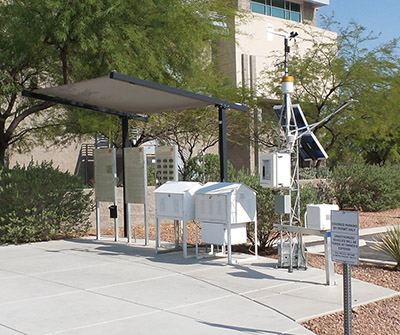
Air Monitoring
The CEMP monitors for airborne radioactivity and weather conditions and makes the results available to the public. Real-time gamma radiation levels and weather conditions can be observed on interpretive signs located at the stations.
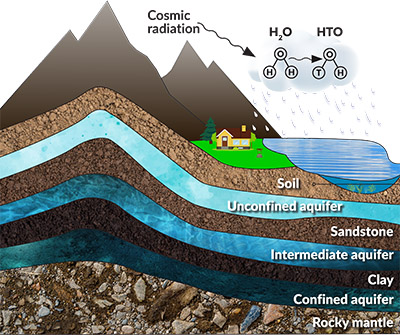
Water Monitoring
CEMP is currently focusing its groundwater monitoring efforts in areas down-gradient from the NNSS. DRI works with CEMs (Community Environmental Monitors) in these areas to identify community water sources, wells and springs to be sampled for tritium.
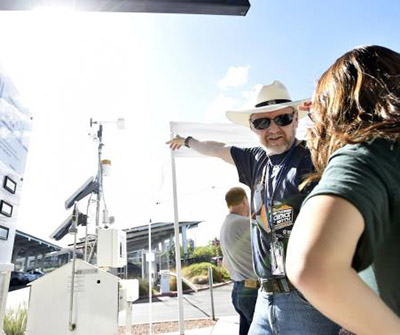
Community Environmental Monitors
The CEMS are local residents trained through attendance at regular workshops conducted by the National Nuclear Security Administration Nevada Field Office (NNSA/NFO) and Desert Research Institute (DRI) to understand the results of the environmental monitoring.
Scheduled Calibration Tests
Calibration response tests of the pressurized ion chambers located at CEMP stations occur quarterly. The most recent or upcoming tests are listed in the following schedule.
The schedule for routine quarterly calibration response tests of the pressurized ion chambers at CEMP stations is:
• October 14th: Las Vegas (NV), Henderson (NV), Boulder City (NV), and Overton (NV).
• October 15-16: Tecopa (CA), Pahrump (NV), Indian Springs (NV), and Amargosa Valley (NV), Caliente (NV), Pioche (NV), Ely (NV), and Duckwater (NV)
• October 20-21: Delta (UT), Milford (UT), Cedar City (UT), St. George (UT), and Mesquite (NV)
• October 26-29: Beatty (NV), Sarcobatus (NV), Goldfield (NV), Tonopah (NV), Rachel (NV), and Alamo (NV)
View the Scheduled Calibration Tests Archive for past dates and locations.
Station Updates
11-2-2026
- DRI will install new sensors and signs at the Indian Springs (NV), Pahrump (NV), and Tecopa (CA) stations the week of November 9th.
- DRI will install new sensors and signs at the Amargosa Valley (NV), Beatty (NV), and Sarcobatus (NV) stations the week of November 16th.
- DRI will install a new sensor and sign at the Rachel (NV) station the week of November 23rd.
Website data for most stations update every 10 minutes.
The following stations update every hour:
Anchor Brand Ranch
Nyala
Sarcobatus
Stone Cabin
Tonopah
Twin Springs
What is CEMP?
Community Environmental Monitoring Program (CEMP) is a network of radiation and environmental monitoring stations located in communities surrounding and downwind of the Nevada National Security Site (NNSS) that monitors the airborne and groundwater environments for manmade radioactivity that could result from NNSS activities. Local citizens, employed as Community Environmental Monitors (CEMs), manage the stations. The CEMP is a joint effort between the Department of Energy’s National Nuclear Security Administration Nevada Field Office (NNSA/NFO) and the Desert Research Institute (DRI) of the Nevada System of Higher Education.
Reports and More Information
CEM Hub
Access this page for information and resources from recent workshops and training held at
DRI for Community Environmental Monitors (CEMs).
The CEMP is a joint effort between the Department of Energy’s National Nuclear Security Administration Nevada Field Office (NNSA/NFO), and the Desert Research Institute (DRI) of the Nevada System of Higher Education.